It’s Not About the Cake – Chapter 13 of It’s Not About the Wedding

•September 20, 2010 • Leave a Comment

The world’s largest wedding cake (pictured at left) was made not for an actual wedding, but for the New England Bridal Showcase in 2008.  This cake was 17 feet tall, weighed 15,032 pounds, contained 700 sheet cakes, and required the use of two fork lifts to put each tier in place.  It was estimated that it could serve up to 59,000 people.  That one really takes the cake.

If you end up like I did, you may not even get more than a single bite of your wedding cake.  The only bite I tasted was the one shoved into my mouth by a lady in white.  Countless hours can be spent considering cake designs, flavors, colors, shapes, and sizes.  I would not want to discourage anyone from doing so, as this is all part of “the dream” for many people, mostly brides.  However, the same words of caution apply here:  Don’t get too wrapped up in the details.
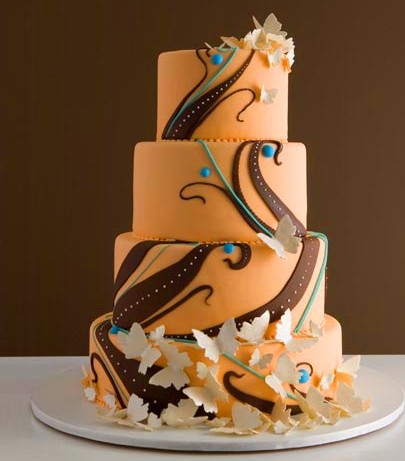
Remember that once a few photographs of the cake have been snapped, this is something that is going to be literally cut into pieces and spread around the room in short order.  So, don’t get too attached.  Many of us have also seen the movie scenes where a multi-tiered cake has been knocked over or fallen down in one felled swoop.  At that point, your only option is to cut up what are now basically sheet cakes anyway, so you may just want to start with those.

Many contemporary weddings also contain a groom’s cake.  A groom’s cake has its roots in the American South, and although it used to be viewed as an added and unnecessary expense, this once-neglected cake has been making a huge comeback. Intended to be a gift from the bride to the groom, the groom’s cake is usually dark (often chocolate or liquor-soaked) and designed with a nod toward what’s traditionally considered “masculine” (i.e., no rosettes in sight).  I recently attended a wedding where the groom’s cake had a NASCAR theme, due to the groom’s obsession with auto racing.

The groom’s cake can serve many purposes, from dessert at the rehearsal dinner to an alternative choice to the bride’s cake at the wedding reception. It’s customary for the groom’s cake to be displayed next to the bride’s cake and later cut and put into boxes for guests to take home. And believe it or not, legend has it that single women are supposed to sleep with a slice under their pillow the same night they receive it — and if they do, they’ll dream of their future husband.  They’ll also have dirty sheets.  Boxed slices of groom’s cake can also serve as your wedding favors. If you go this route, take advantage of the opportunity to get creative with the packaging — an additional way to reflect your bridal style.  Whatever you decide, gifting your new husband with his own cake is something you should do because you want to — not because you feel obligated.

Remember, a big, expensive cake is not a prerequisite for getting married, and don’t believe anyone who tells you that marriage is a piece of cake!

It’s Not About the Reception – Chapter 12 of It’s Not About The Wedding

•September 17, 2010 • Leave a Comment

“It was a good time.  Somebody else paid.”  This was a good friend’s response when I told him that I really didn’t remember much about his wedding and reception, which I had attended more than 10 years prior.  The truth is that apart from the five-tiered cake falling over, or the best man’s drunken and tearful speech, most people will remember very little about your wedding reception.

Approximately 50% of many couples’ entire wedding budget is spent on the reception alone.  Considering that in 2007 the average cost of a wedding was around $30,000 – before the recession – that’s a serious chunk of change.  By the middle of 2009, that average cost had plummeted to around $16,000, but we’re still talking about potentially spending thousands of dollars on this one part of your big day.

There are so many potential stressors in planning the reception.  Be careful not to get wrapped up in them.  They include:

The food / caterer
The band / DJ
The location
The first dance
The cake (more on this later)

One of the biggest decisions to be made when planning a wedding reception revolves around the food and drinks.  Do you provide a full, sit-down dinner for each guest?  Should you go with a buffet-style spread?  You could cut costs and go pot luck, asking your guests to bring a dish they have prepared.  Perhaps your event will include only the cake and some of those tasty little mints.  Alcohol or no alcohol?  Open bar or cash bar?  There are so many decisions to be made.  Start by setting a budget for the food and/or drinks and work backwards from there.  Don’t be too worried about any of these choices.  Most likely, not a single person will remember the food from your wedding reception five or ten years from now!

The choice of a live band or a disc jockey may revolve around budget as well.  In fact, those are certainly not the only choices available for music.  I have been to weddings where a string quartet played both in the wedding ceremony as well as at the wedding reception.  There is no right or wrong choice here, simply whatever you desire and can afford.  There’s nothing wrong with an iPod full of your favorite songs playing through a boom box.  Just make sure you have the chicken dance and YMCA.

Where all of this takes place can be as simple or complex a choice as you want to make it.  If your wedding takes place in a church, there may be a multi-purpose room available right there in the same building.  This could be both a time and money saver.  I have heard of reception locations ranging from hotel ball rooms to an outdoor tent, and from a person’s home to the House of Blues.  Budget, space, and personal tastes are the only limitations.

Copyright 2010 KB Image Photography

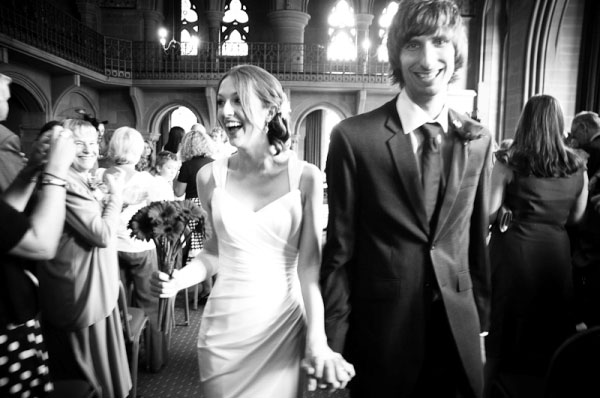
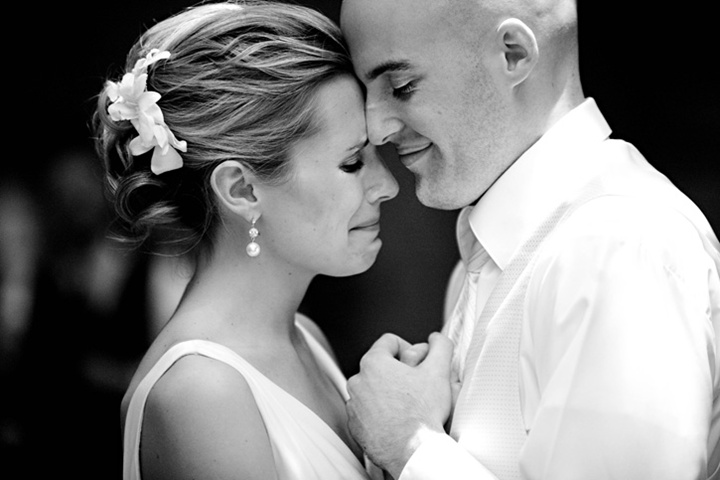
The first dance is a very unique and special three to five minutes of your life.  It may not seem like a big deal, and for many, it isn’t.  To me, it represents a “calm in the eye in the hurricane” moment of sorts.  The two of you have been immersed in the details of planning and going through a wedding for months.  The past few days, in particular, have probably been quite crazy.  On this day, you have been (and are) surrounded by your closest family and friends, with barely a minute to yourselves.  Take this time to spend a few peaceful moments with your new bride or husband.  The song you choose is completely up to you.  Hold them close.  Gaze into their eyes.  Savor the moment.

Not only is it not about the reception, many newlyweds don’t even have one.  Whether it’s because the marriage took place at the courthouse with the Justice of the Peace, or because it just wasn’t in the budget, a reception is a luxury, not a necessity.  If you are fortunate enough to have one, a reception is simply the icing on the cake.

It’s Not About the Pictures – Chapter 11 of It’s Not About the Wedding

•September 15, 2010 • 1 Comment

Obviously, there is something to be said for indelibly capturing the events of this wonderful day in photographs and/or video.  Just keep in mind that you may only end up pulling out that photo album or cuing up that video on one or two occasions in your lifetime.  Pictures are a fun, important way to look back, but the most important moments from that day – the look in the eyes of your betrothed – the pure bliss of that first married kiss – will be burned into your memory forever.

All rights reserved by weddingssc2 / flickr

Many couples elect to have the bulk of their formal pictures taken during the very small window of time between the wedding and the reception.  They choose this time because the bride and groom are often not allowed to see each other prior to the wedding ceremony, and the entire wedding party and extended family are wearing their Sunday best.  While this makes perfect sense, it can become the first post-wedding stressor quickly.  Trying to corral seven cousins and 10 nieces and nephews into the family photos can be a little like herding cats.  Taking scores of photographs of dozens of different groups of people can also be quite time-consuming.  I have been to receptions where the bride and groom, and their wedding party and families, did not arrive for more than an hour.

All rights reserved by weddingssc2 / flickr

If you have a large wedding party, it may be wise to consider taking as many photographs as possible before the ceremony.  If the bride and groom are quarantined, you can still take scores of photos of just the bride with all of the extended family, followed by the groom.  The actual “just married” pictures with both the bride and groom can still take place immediately following the ceremony.

I love wedding pictures that bring out the personality of the bride and groom, not just show what they were wearing and who was there that day.  Ask your photographer to get creative and try to capture the feel of the day.  There are no rules that state which poses or configurations you are required to get pictures of!  Have fun with it!

As an added bonus, wedding photos can serve other purposes as well!  I read about one wedding where the bride’s and groom’s family and friends were literally lunging across the aisle at each other multiple times during the ceremony, which led to real fights with flying chairs and overturned tables at the reception.  Some of the wedding guests actually ordered prints of the wedding photos as evidence in assault cases!

Assuming your wedding is a bit more restrained, it is important to try to remain calm and savor the moment!  Especially if you are taking photographs immediately after the ceremony, don’t lose sight of the fact that you are now married!  This is supposed to be the fun part.  When you do look back at these photographs, you’re going to want to see true joy, laughter, and excitement on your face – not a fake, forced smile that attempts to hide your stressful frustration or impatience.  Now is the time to relax and go with the flow.  Nothing that happens from this point out – whether it goes according to plan or not – can change the fact that you are now married to the love of your life, and that is kind of the point of all of this!

It’s Not About the Vows – Chapter 10 of It’s Not About the Wedding

•September 13, 2010 • Leave a Comment

Ok, so it actually kind of is about the vows.  More accurately, it’s not about which specific vows you choose to make.  It’s about keeping them.

Outside of a wedding ceremony, the word “vow” is rarely used in modern times.  Unless you’ve decided to join a monastery or a convent, you probably won’t come across it too often.  So, what is a vow?  A vow, simply put, is a promise.

Now, at some point in our lives, most of us have made and broken a promise of one kind or another.  Even as children, we make promises with fingers crossed behind our backs.  As teens, we may fall in and out of love, giving or receiving a broken heart in the process.  Yes, even adults break promises.  However, the promise you make in a wedding is intended to be a little more difficult to break.  Breaking a promise that was made privately, between two people, is one thing.  Breaking a promise that was made before a room filled with 300 of your closest family and friends, as well as God, is something altogether different.

Wedding vows come in many shapes and sizes.  For many, there is a fairly standard, traditional set of vows that does the trick just fine.  They usually look something like this:

Just don't call it a "cheat sheet"!

“I, (name), take you (name), to be my lawfully wedded (wife/husband), to have and to hold from this day forward, for better or for worse, for richer, for poorer, in sickness and in health, to love and to cherish, until death do us part.”

While many agree with the basic sentiment of these traditional values, they may feel the need to give them a more contemporary interpretation along these lines:

“I love you. You are my best friend.
Today I give myself to you in marriage.
I promise to encourage and inspire you, to laugh with you,
and to comfort you in times of sorrow and struggle.
I promise to love you in good times and in bad,
when life seems easy and when it seems hard,
when our love is simple, and when it is an effort.
I promise to cherish you, and to always hold you in highest regard.
These things I give to you today, and all the days of our life.”

Of course, some couples decide to compose their own unique vows to express their love and dedication to each other.  I would certainly encourage this for the most part, as each couple is completely unique in their love for each other and how they express it.

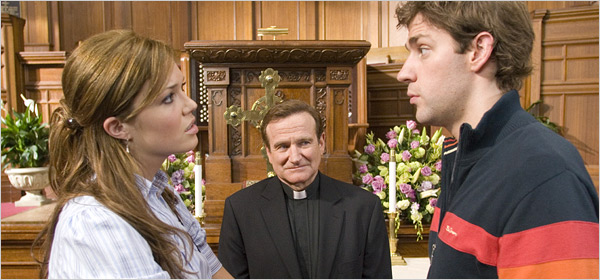
However, I must also caution you to not get too caught up in this detail.  An example of what can happen is played out in the 2007 movie, License to Wed, in which the bride and groom-to-be are given the assignment of writing their vows by the reverend who is to marry them (played by Robin Williams).  As the wedding draws near, the bride, Sadie (Mandy Moore), has been finished writing her vows for quite some time.  She is less than impressed when she discovers that the book in which the groom, Ben (John Krasinski), is supposed to have been writing his vows contains nothing more than a series of flip book cartoon drawings.  The point is that this option is not for everyone.  Make sure you both want to write your vows before the decision is made.  It wouldn’t be the end of the world if one of you used traditional vows and one used original vows, would it?

One more thing:  In this day and age where so many marriages end in divorce, some couples have decided to remove “until death do us part” from their vows.  Many people who have been through a divorce feel particularly guilty about having promised to be with this person until one of them dies.  Instead, they are inserting ambiguous phrases like “for as long as our love shall last” or “until our time together is over.”  While I understand their point of view, especially having been divorced myself, I do not agree with it.  If you are entering into a marriage with any doubt about how long the marriage will last, then you are not ready to be married.  A marriage built on such indecision and half-hearted commitment is doomed to fail before it even begins.  Time and circumstances may weather and eventually break down such a promise, but on this day, in this place, for this reason, as you hold the hands of the one you love and look into his or her eyes, if you don’t believe with all your heart that you will be with this person for life, then don’t say, “I do.”  Postpone the wedding and figure out why you don’t feel that way, and if you ever will.  You owe it to the person next to you to give your whole heart completely or not at all.

In her 2009 song, “The Way I Am”, Ingrid Michaelson sang, “I love you more than I could ever promise.”  No matter what vows you speak on your wedding day, that sentiment is something to aspire to.  Real love, dedication, and commitment are actually quite difficult to put into words.  Words are important, but they are limited by the very fact that they are only words.  Living out your vows is the only way to truly prove your love.

Love, Your Hero, Daddy

•September 10, 2010 • 3 Comments

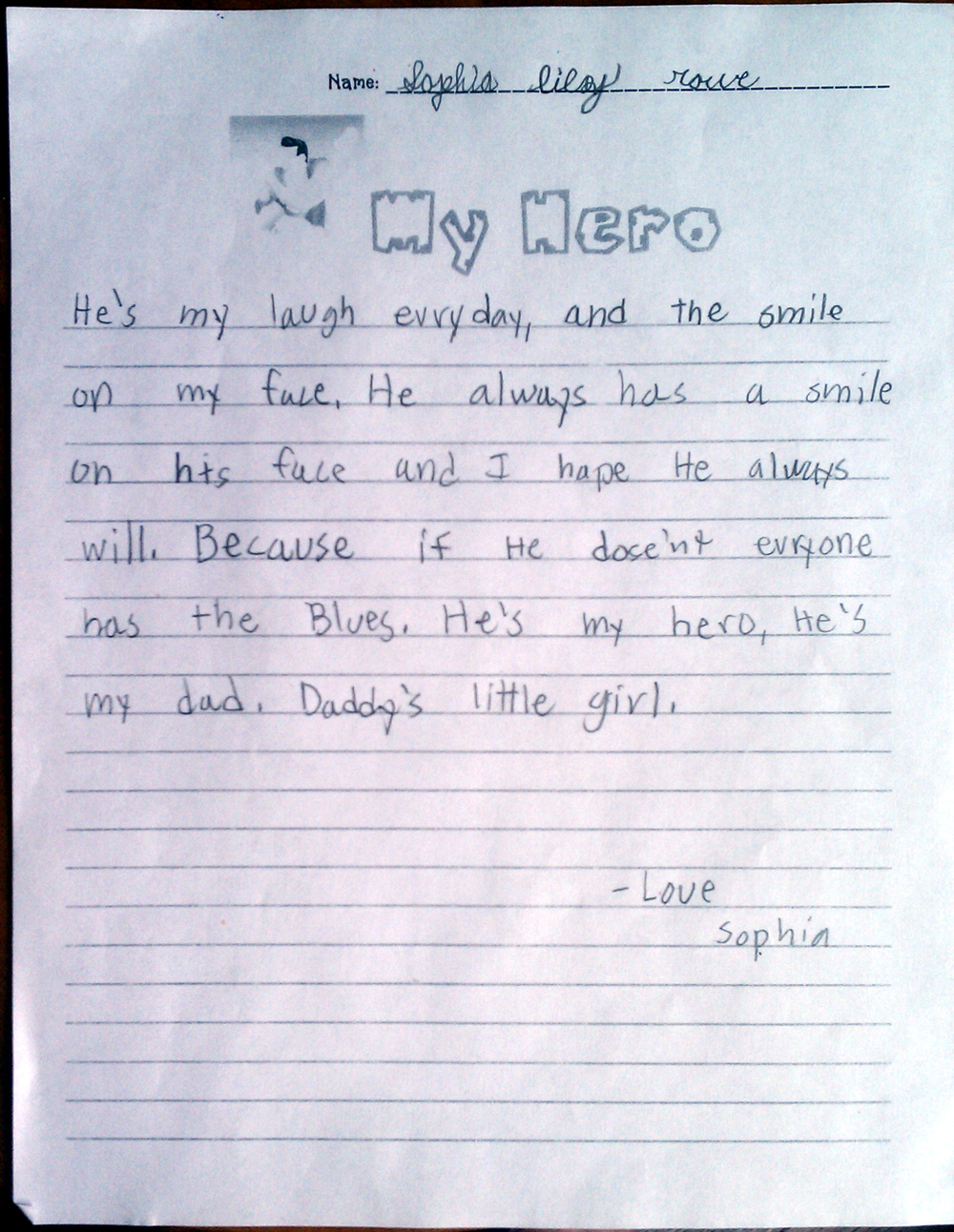
They don’t come all that often – those moments when you just have to stop and say, “This is one of those moments I will treasure all of my life.”  My 8-year-old daughter gave me one the other day.  I picked her up from school, along with her twin brother, as I only get to do on Wednesdays.  When we got home and I pulled out their backpacks to assess the homework situation, the paper pictured to the left was the first thing I saw.  I almost cried.  Especially when she noticed me reading it and stopped what she was doing to watch my reaction.  When I finished and smiled at her, she said, “Oh, Dad” and walked right over with those sweet, dancing eyes and gave me a kiss.

As a divorced father who only gets to be with his kids about 60 days per year, I often wonder what kind of impact I’m actually having on their lives.  I have always tried to be the best father I can be in the time that I’ve been given, but when days go by and they don’t call me, I have wondered if I even cross their minds.  I have never doubted their love for me, or mine for them, and we express it often to each other.  Still, as the hours and days we spend together come and go in the blink of an eye, it sometimes seems as if all I’m left with are hurried hugs in their mother’s driveway and a lonely car ride home.  How wonderful it is to know that they take more than that with them when they go.

This morning, at her school, she will be reading this paper out loud on the morning announcements, broadcast to the entire school.  How proud am I to say that she is mine?  And though I’m left to wonder again and again about how much of their lives I’m missing out on, it’s moments like this that make me cherish even more the time we have together.  Thank you, Sophia; self-proclaimed “Daddy’s little girl.”  I love you more than you will ever know.

Love, Your Hero, Daddy.

It’s Not About the Music – Chapter 9 of It’s Not About the Wedding

•September 10, 2010 • 1 Comment

Just because the two of you are going to make beautiful music together for the rest of your lives doesn’t mean you should stress about the music for your wedding.  I wrote my first song at the age of 9 and majored in music in college, and yet, there was not a single note of music in my wedding.  That didn’t make it any less meaningful or powerful.

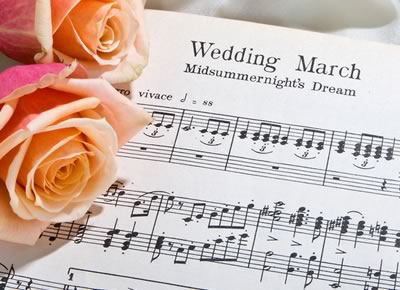
Hollywood movies would have you believe that walking down the aisle to Wagner’s “Bridal Chorus” (also known as “Here Comes the Bride”) is a prerequisite for getting married.  Obviously, this is simply not true.  If she wanted to, the blushing bride could saunter down the aisle to anything from the Macarena to a funeral dirge.  It wouldn’t change what is about to take place.  As mentioned in Chapter 8, many people consider a wedding ceremony to be a worship service.  If you are one of these people, you may want to forego the Macarena for something along the lines of “The Lord’s Prayer”.

If you’re musically inclined, you may choose to perform a song as part of the ceremony.  A good friend of mine, Gordon Mote (gordonmote.com) is an incredible musician and performer who has been blind since birth.  I still remember hearing him sing, as part of his wedding, a song that he wrote for his bride-to-be called, “If They Could See You Through My Eyes”.  I am certain that his wife of 18 years remembers that moment too.

Once you’ve decided which music to include, then comes the matter of how it is to be presented.  I have been to weddings that incorporated a wide variety of musicians and/or performances including string quartets, pipe organs, vocalists, bagpipes, and yes, even pre-recorded music.  No one is going to mind one bit if you walk down the aisle to music playing on a CD instead of a live string quartet.

Recessional music can be traditional or creative as well.  My sister always joked about using the Hallelujah Chorus.  As a teenager, I joked that I wanted to use “Boom, Boom, Boom (Let’s Go Back to My Room)”.  Undoubtedly, most of you have never heard of that song.  It’s from 1987.  I’ve just dated myself.

Of course, as I mentioned earlier, music isn’t required at all.  The point is that this is your wedding.  If you choose to include music, it is a simple yet effective way to place your unique stamp on the event.   Just remember that music is not what makes a wedding, or a marriage, successful.

This is the 9th in a series of 16 chapters from a new manuscript I am working on called It’s Not About the Wedding: A Common Sense Guide to Getting it Right the First Time, or Any Time.  I would love to receive any and all positive or negative feedback on this topic, particularly from those of you who are perhaps currently engaged to be married!  Stay tuned for subsequent chapters to follow…

It’s Not About the Guest List – Chapter 8 of It’s Not About the Wedding

•September 9, 2010 • Leave a Comment

There are several different approaches a bride and groom could use to create a guest list for their wedding:

  1. The larger the list, the more gifts we receive.  Hello Second Cousin Elmer!
  2. You and me and the J.O.P. (Justice of the Peace).  All we need is love.
  3. Somewhere in between.

In reality, this is a hugely important communication project for the future spouses.  The guest list is an exercise in listening and making sacrifices to meet common goals.  Start by talking openly with each other about your vision for your wedding.  It’s possible that one of you has always envisioned a big wedding in a big church with hundreds of family and friends while the other has dreamed of being married by Elvis in Vegas.  This could be a problem!  Get on the same general page in this regard and go from there.

One method involves having both the bride and groom create a list of every relative, friend, co-worker, college buddy, neighbor, and ex-boyfriend/girlfriend they would even remotely consider inviting to the wedding.  This could take several days.  Do this without helping each other to be sure that one is not influenced by the other – at least not yet.  Once these lists are complete, count the listed guests (eliminating duplicates) and you will have an absolute maximum size for your wedding.  Be sure to keep in mind that some single guests may bring a guest of their own.

From here, you can begin going over both lists together, whittling down the attendees and weeding out the riff-raff and anyone your future spouse may vehemently veto for one reason or another.  This is where the whole “listening and making sacrifices to meet common goals” thing comes into play.  Try not to be defensive, but listen carefully to the reasons why someone may not make the cut.

Many times, expense is the reason for shortening that long list of guest.  If your combined guest list is 300 people, but your budget will only cover 100 people, something’s got to give.  Additionally, if one or more parents are footing the bill (or even if they’re not), you should probably ask them for a list of their desired guests.  There are probably friends or co-workers from their generation who they wish to invite, but who wouldn’t appear on your own list.  This is an important day for them as well.  In fact, even if only one parent or set of parents is helping to pay the bills, all should be consulted.

As previously mentioned, anything beyond a first marriage may follow a different set of guidelines.  In my opinion, these guidelines often more closely represent the entire point of this book.  The guest lists and budgets tend to shrink dramatically.  By that point, it’s easier to resist the seduction of the details, and to focus on the big picture.  Obviously, the goal is to marry once for life.  Everyone wants this time to be the last time.

No one walks down the aisle together
Believing it’s not going to last forever
We all think we can beat the odds
We make our plans, then live out God’s.

Take some time to focus on two things:

  1. What are we inviting these people to witness?

It is the culmination of one journey, and the beginning of another.  For many, it is literally a worship service.  It is a public declaration of love.  It is, truly, a big deal.

  1. Why are we inviting these particular people?

Understand that there is nothing wrong with sending one set of invitations for the wedding and reception, and another for only the reception.  A friend of a friend of a friend may not need to be there for the ceremony.  A best friend since second grade probably should.  Wedding guests should be the most important people in your lives, with whom you wish to share one of the most important events of your lives.

This is the 8th in a series of 16 chapters from a new manuscript I am working on called It’s Not About the Wedding: A Common Sense Guide to Getting it Right the First Time, or Any Time.  I would love to receive any and all positive or negative feedback on this topic, particularly from those of you who are perhaps currently engaged to be married!  Stay tuned for subsequent chapters to follow…

It’s Not About the Flowers – Chapter 7 of It’s Not About the Wedding

•September 7, 2010 • Leave a Comment

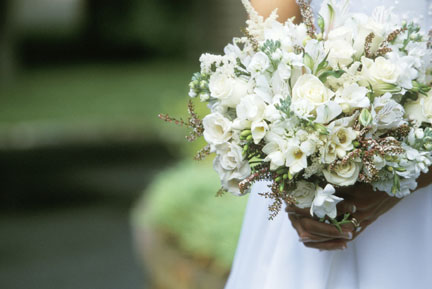
Flowers often served one of two purposes in ancient wedding ceremonies:  They were either combined with pungent herbs such as rosemary and garlic to drive away evil spirits, or their own pungent aromas were intended to mask the bride’s own body odor.  If neither of these scenarios applies to you, you’re not alone.  These days, flowers serve a mostly decorative purpose, and are frequently chosen simply on the basis of color coordination with the overall theme of the wedding.

There are those, however, who select specific flowers for their symbolic meaning.  Orange blossoms, for example, are an emblem of fruitfulness because the orange tree flowers and bears fruit at the same time.  Baby’s breath represents fertility.  Ivy is a symbol of everlasting and unbreakable love.  Roses also stand for love, lilies for virtue, and so on.

Regardless of why you wish to include flowers in your wedding, the goal is to not allow them to become yet another stressful detail.  Aside from any intended symbolism, as mentioned above, they have nothing to do with the joining of the bride and groom in matrimony.  There are brides-to-be who have fallen to pieces when the wrong flowers arrived for their wedding, the right flowers arrived late, or perhaps flowers didn’t arrive at all.  While that would be understandably frustrating, don’t become so attached to every little detail of your wedding that if something doesn’t go as planned, you lose sight of the big picture.  At the end of the day, you and your best friend will be married, and that – not the things that went wrong – is the only thing you will care about by then.

Additionally, in this age of “going green”, you might consider choosing some kind of potted plants or flowers that could be taken home by your guests or donated to a nearby nursing home.  Otherwise, all of those beautiful symbols of your love will simply wither and die in a day or two.  Perhaps those symbols of your love could spread some joy to others for days, weeks, or even months after the wedding.

This is the 7th in a series of 16 chapters from a new manuscript I am working on called It’s Not About the Wedding: A Common Sense Guide to Getting it Right the First Time, or Any Time.  I would love to receive any and all positive or negative feedback on this topic, particularly from those of you who are perhaps currently engaged to be married!  Stay tuned for subsequent chapters to follow…

It’s Not About The Wedding – Chapter 6 – It’s Not About the Dress

•September 3, 2010 • Leave a Comment

This is the 6th in a series of 16 chapters from a new manuscript I am working on called It’s Not About the Wedding: A Common Sense Guide to Getting it Right the First Time, or Any Time.  I would love to receive any and all positive or negative feedback on this topic, particularly from those of you who are perhaps currently engaged to be married!  Stay tuned for subsequent chapters to follow…

Chapter 6 – It’s Not About The Dress

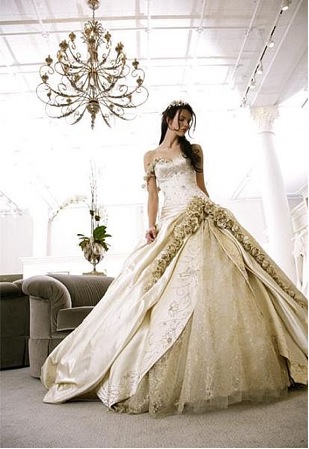
Obviously, as a man, it’s easy for me to say it’s not about the dress.  I’ll only see my bride in it for an hour or two, tops.  Honestly, I have a hard time justifying spending hundreds or even thousands of dollars on something that will probably spend literally decades hanging in a closet or stuffed inside a trunk in the attic.  Heck, I’m renting my wedding attire.  Why can’t my bride?

At any rate, as previously mentioned, little girls will dream.  Countless fairy tales, television shows, and popular movie storylines revolve around finding “the perfect dress”, and while the dress is a key component of any fairy tale wedding, not everyone has the luxury of a fairy godmother like Cinderella.

One story tells of a woman who grew up always knowing she would wear her mother’s hand-sewn wedding dress on her wedding day.  Two days before the wedding, she and her parents went to pick up the dress from the dry cleaners, only to learn that the old and brittle fabric had basically fallen apart when the poor store owner attempted to clean it by hand.  The dress was ruined.  And yet, the wedding went forward and the bride looked ravishing in her store-bought replacement dress.

The truth is, unlike the wedding ring, which you will wear every day for the rest of your life, you will only wear your wedding dress once.  Sure, it will live on through your wedding photos, and in some very rare cases, it may hold together long enough for your daughter to wear it in her own wedding, but you will only need to squeeze into it for a matter of hours.  So, what’s the going hourly rate for a wedding dress?  Of course, there is the “You only get married once” point of view.  Perhaps your parents are paying anyway, what’s another $1000?

Now, I understand that if this isn’t your first wedding, it’s different.  The majority of people getting married for anything other than the first time typically bypass some of the fanfare of the typical wedding.  For me, getting married for keeps meant wearing something straight out of my closet.  My bride wore a department store dress from Dillard’s that day, not Vera Wang, but WOW did she look beautiful!

The bottom line is this:  There is nothing wrong with finding and buying “the perfect dress” for your wedding.  You’ve dreamed about it for most of your life.  You want to look amazing for your groom-to-be.  It’s an integral part of what will surely be an unforgettable milestone in your life.  The point is not to overemphasize the role of the dress.  Do you really believe your betrothed is going to have any less of a sparkle (maybe even a tear) in his eye when he sees you coming down the aisle in a $250 dress?  He’s looking at YOU, not the dress.  Honestly, he’s probably thinking about getting you out of that dress as quickly as possible.

Deep Thoughts from a Shallow Mind – 9/2/10

•September 2, 2010 • 1 Comment

Isn’t “psychological” an oxymoron?

 
Design a site like this with WordPress.com
Get started